Case File Summary: Homicide of Pauline F. Storment (FPD Case #71-1-005)
1.0 The Homicide of Pauline Storment: April 12, 1971
The foundation of any homicide investigation rests upon a thorough understanding of the victim and the immediate circumstances of their death. Victimology, combined with the timeline and physical evidence of the attack, provides the critical framework from which all subsequent leads, witness interviews, and suspect evaluations are built. The murder of Pauline Storment is a case defined by its sudden, violent nature and the initial wealth of witness information that, despite its promise, ultimately led to one of the state’s most enduring unsolved homicides. Establishing the foundational facts of the crime is therefore the essential first step in reviewing this extensive case file.
On the evening of Monday, April 12, 1971, Pauline Frances Storment, a 27-year-old sophomore at the University of Arkansas from Ozark, was brutally attacked while walking home. Her movements that evening were meticulously traced by investigators. She had spent time at the Army ROTC office on campus where she worked part-time, then attended a Black Gospel Singers musical performance at the university’s Fine Arts Center. Following the concert, she visited the main library before beginning her walk home.
At approximately 9:30-9:40 PM, near the corner of Duncan and Treadwell Streets, just a few blocks from the university campus, Storment was assaulted. The attack was swift and violent; she was stabbed between seven and eight times in the chest, stomach, and on one arm. Her screams alerted several residents and passersby, who rushed to her aid. Witnesses found her bleeding on the ground, her books and personal belongings scattered on the nearby grass.
Storment was transported to Washington County General Hospital, where she succumbed to her injuries during surgery approximately an hour and a half later, at around 11:00 PM. Her statements to those who first arrived on the scene would prove to be the most direct, albeit limited, evidence of her attacker’s identity. These initial witness accounts formed the basis of the immediate law enforcement response.
2.0 Initial Investigation and Eyewitness Testimony
The first 48 hours of a homicide investigation are universally recognized as the most critical period for gathering actionable evidence. The Storment case presented investigators with the specific challenge of an initial witness pool that provided a strong, consistent general description of a suspect, yet offered conflicting specifics. This divergence in details regarding clothing material and exact hair color created an immediate investigative dilemma, requiring meticulous analysis to form a coherent, actionable picture of the assailant.
A summary of the most significant eyewitness accounts provides the core of the initial investigative file:
- Mike Adair: While driving on South Duncan Avenue, Adair observed a man following approximately five feet behind Pauline Storment. Just seconds after she passed from his view, he heard her screams.
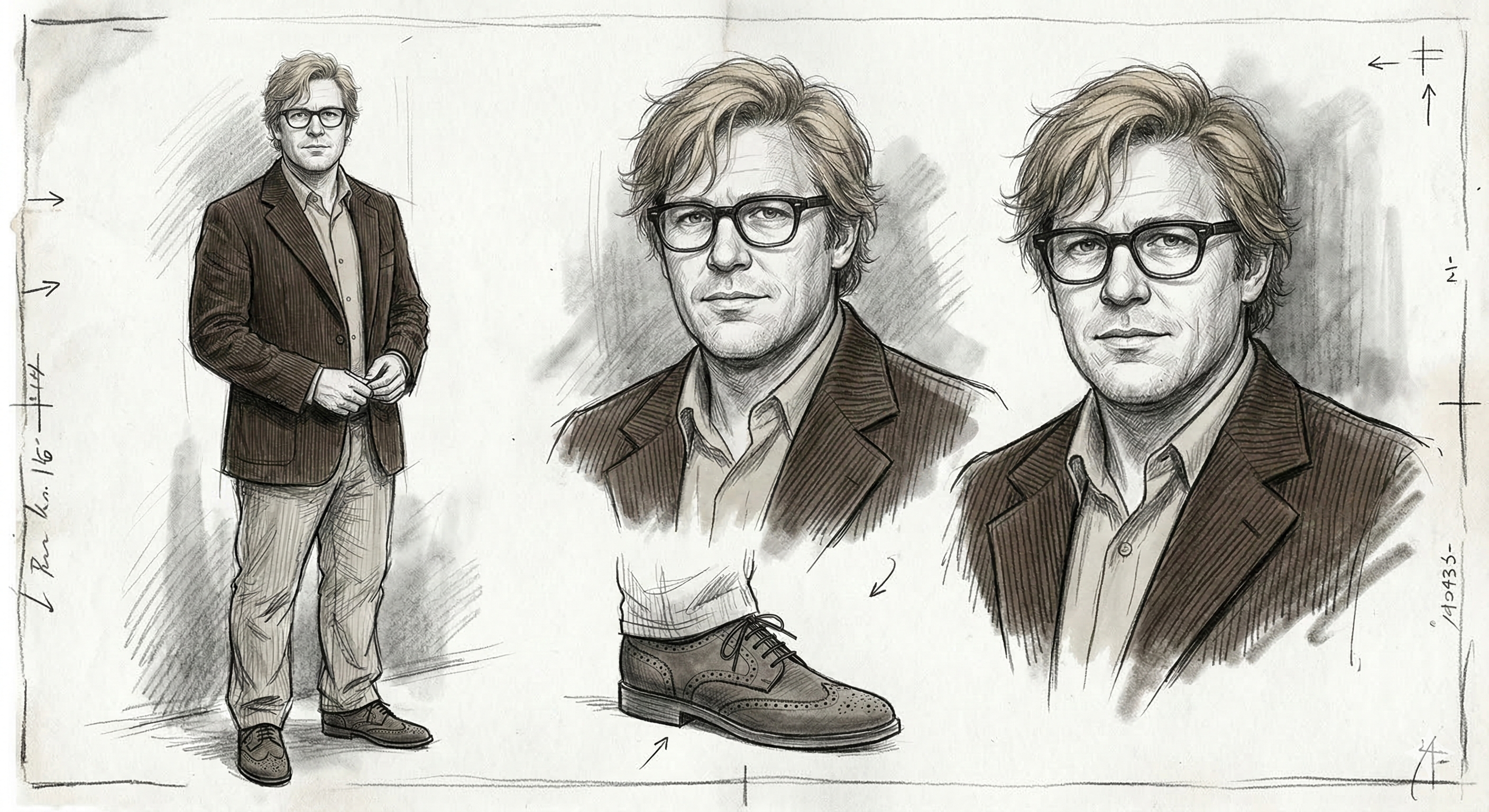
- Joe Clifton: A resident of nearby Nettleship Street, Clifton also heard the screams and confirmed seeing a man following the victim. He provided investigators with a physical description of the subject: approximately 5’10” to 6′ tall, with blond or sandy-colored hair, wearing a brown sports jacket. He believed the man possibly wore glasses and later reviewed a composite drawing, stating it bore a resemblance to the individual he saw.
- Jack Huff: Residing at Summit Terrace apartments, Huff heard a loud scream and a yell for help. He ran to the street and was one of the first to assist the victim, helping her onto the grass. He reported that Storment told him directly that “a person with glasses hit me in the chest” and confirmed that “the man that hit her had been following her.”
- Gary Gammil (Gammell): Another Summit Terrace resident, Gammil heard the screams and ran toward the scene. He witnessed the victim falling to the ground and noted that her books and personal items were lying on the grass just north of a light pole.
- Peter Novick: Novick was driving in the area when he heard what he described as a single, soft cry for help. As he turned his car, he saw a man run from a darkened area between two apartment buildings. His headlights provided a good look at the individual, whom he described as fairly husky, about 5’10”, wearing a brown jacket and light-colored pants. He noted the jacket “looked like corduroy, it could have been suede… it was very smooth.” The man’s hair was straight and blondish-brown.
The Victim’s Dying Declarations
Pauline Storment’s final statements, relayed through multiple witnesses, carry significant evidentiary weight. She repeatedly stated that she had been followed by a man. She specified to Jack Huff that her attacker “wore glasses” and that he “hit me in the chest,” a layperson’s description of being stabbed. Her last reported words at the hospital were, “Don’t hurt me.” These declarations provided the most direct evidence from the victim herself, establishing the presence of a stalker-type assailant and offering a key physical descriptor (glasses) that guided the initial search.
This constellation of witness testimony, centering on a man with glasses and a brown jacket, provided investigators with the probable cause necessary to apprehend a suspect matching that description within an hour of the attack.
3.0 Primary Suspect: The Arrest and Exoneration of Wallace Peter Kunkel
Developing a primary suspect based on probable cause is a standard and critical phase of a homicide investigation. This process involves aligning witness descriptions and circumstantial evidence to identify a person of interest, followed by legal and forensic procedures to either substantiate or refute their involvement. In this case, information gathered at the scene led to a swift arrest, setting in motion an intense period of legal and evidentiary scrutiny.
Approximately 45 minutes after the stabbing, police arrested Wallace Peter Kunkel, a 17-year-old Fayetteville High School junior. He was apprehended in a parked car with another individual (who was not held) on University Street in front of Grey House, approximately six blocks from the scene of the slaying. The key evidence prompting his arrest was the presence of what appeared to be wet bloodstains on his jacket, shirt, and trousers.
Following his arrest, Kunkel was formally charged with first-degree murder. His defense attorney, Richard Hipp, immediately filed a series of aggressive legal challenges, including a petition for a writ of habeas corpus, a motion to quash the information and arrest for lack of probable cause, and multiple motions for discovery of evidence.
Forensic Evaluation
The physical evidence connected to Kunkel was the focus of intense analysis:
- Clothing samples were sent to the State Medical Examiner. Analysis confirmed the presence of Type A human blood on Kunkel’s clothing.
- Blood typing performed on the victim, Pauline Storment, also revealed she had Type A blood. The matching Type A blood type provided corroborating circumstantial evidence but lacked the exclusionary power of more specific forensic markers, as Type A is a common blood group.
- During the investigation, Sheriff Bill Long discovered a blood-stained butcher knife thrust into the ground in a vacant lot about 100 feet from the crime scene. However, from the outset, authorities publicly expressed doubt that it was the actual murder weapon.
Exoneration and Release
After initially invoking his right to remain silent, Kunkel agreed to undergo a polygraph examination. Following a series of tests, investigators announced they were “satisfied that he had no part in the murder.”
Subsequently, Prosecuting Attorney Mahlon Gibson announced that the murder charge was being dropped (nolle prossed), citing “new evidence” and a “sudden shift in the course of the investigation.” Kunkel was released from jail, and his parents held a press conference expressing their relief.
With the exoneration of its only suspect, the investigation was forced back to its starting point, compelled to pursue new avenues and re-evaluate other potential leads.
4.0 Development of Subsequent Leads and Persons of Interest (1971-1980)
When an investigation’s primary suspect is exonerated, the case enters a challenging new phase. Detectives must pivot, re-examining existing evidence while remaining open to new information, which can surface years or even decades later through informant tips, unsolicited confessions, or the discovery of seemingly unrelated crimes. The Storment case file documents several such developments in the years following Kunkel’s release, each requiring significant investigative effort to assess.
4.1 The Confession of Jack Butler (May 1971)
On May 21, 1971, just over a month after the murder, a 27-year-old man named Jack Butler walked into the Fayetteville Police station and provided a voluntary statement confessing to the crime.
- Confession Details: Butler claimed that on the night of April 12, he was walking on Duncan Street when he saw a woman he mistook for his wife. He stated he followed her, went up behind her, and “stabbed her with my Knife (my Pocket Knife) three times.”
- Analysis: Butler’s confession contained significant discrepancies with the established facts of the case. He claimed to have used a pocket knife, whereas the autopsy suggested a larger, butcher-type knife was more likely. He also stated he stabbed her three times, while the victim suffered seven to eight wounds. These inconsistencies cast serious doubt on the credibility of his statement.
4.2 The Barbara Hamilton Correspondence and Stephen Wayne Cooper (1973-1978)
Between 1973 and 1978, Detective Coffman of the Washington County Sheriff’s Office received a series of handwritten letters from a woman named Barbara Hamilton. These letters detailed second-hand information she had received from her sister, Betty Baker (Henson), concerning a man named Stephen Wayne Cooper.
- Allegations: Hamilton’s letters conveyed her sister Betty’s profound fear of Cooper, who had left Fayetteville with Betty and her partner, Jerry, and was living in Aspen, Colorado. The central claim was that Cooper had confessed to Jerry about “the stabbing with a big butcher knife.” The letters also alleged that Jerry’s mother had heard the same story and could corroborate it.
- Correlated Criminal History: This lead gained significant weight when correlated with Cooper’s known activities. In June 1973, Stephen Wayne Cooper, a 21-year-old from Fayetteville, was arrested in Arizona and charged with the homicide of a man near Yarnell. He later pleaded guilty to a reduced charge of manslaughter. A court-appointed psychiatrist diagnosed Cooper with “schizophrenia or a schizophrenia-like syndrome,” establishing a documented history of extreme violence.
4.3 The Anonymous “Master Detective” Letter (1980)
On October 10, 1980, the editor of the Official Detective Group received an anonymous letter regarding a November 1974 article about the Storment case titled “Mysterious Butchery of the Beautiful Coed.” The magazine forwarded the letter to the Fayetteville Police Department.
- Letter Content: The handwritten letter made a startling claim:
- Investigative Follow-Up: The Fayetteville Police Department submitted the letter and its envelope, which was postmarked from Capron, Virginia, to the Arkansas State Crime Laboratory for forensic analysis. The lab successfully developed seven partial latent fingerprints, which were photographed and kept on file for future comparison. Correspondence with the Southampton Correctional Center in Capron initiated a long-term investigative effort to identify the writer.
These distinct, though ultimately unresolved, leads from the 1970s and early 1980s represent the last major active phases of the investigation for nearly a decade.
5.0 Cold Case Status and Final Disposition
A homicide investigation becomes a “cold case” when all credible leads have been exhausted and the investigation has stalled. Standard procedure for such cases involves periodic review, preservation of evidence, and responding to inquiries from family or the public. Even without active leads, a case remains officially open, awaiting any new information that might provide a path forward.
Decades after the crime, the Storment case file shows evidence of this continuing, albeit inactive, status. In March 1990, the victim’s cousin, Betty Grace, wrote to the Fayetteville Police Department inquiring about the status of the investigation. In his reply, Chief of Police Richard L. Watson confirmed the case remained “open and unsolved” and stated, “The last lead actively pursued came from Virginia in October 1980.”
This inquiry prompted renewed efforts to identify the author of the 1980 anonymous letter. The follow-up consisted of two distinct investigative actions directed at Virginia corrections officials:
- On March 12, 1990, the department sent a teletype to the Southampton Correctional Center in Capron, VA, requesting a records check to determine if the initial suspect, Wallace Peter Kunkel, was incarcerated there on or about October 6, 1980.
- On March 28, 1990, a formal letter was sent to the same facility requesting a similar records check on a much longer list of individuals associated with the case, including Richard Finley, Terry Smith, and eyewitness Joe Clifton.
The Virginia Department of Corrections responded that their records indicated that while Finley, Smith, and Clifton had served sentences in Virginia at various times, none were confined at the specific institution in Capron during the period in question.
The investigation remained dormant for another three decades. After the Arkansas State Police formed its cold case unit in 2020, the Pauline Storment file was among the historical cases selected for review. After a thorough examination of the existing file and a determination that there were no new leads or forensic avenues likely to produce an arrest, the unit officially closed the case as unsolved in 2024.
After more than 50 years, the murder of Pauline Storment remains one of Arkansas’s oldest and most prominent unsolved homicides. The case file stands as a testament to the extensive but ultimately inconclusive investigative efforts that spanned five decades.
6.0 Appendix: Summary of Key Individuals
| Name | Role in Case | Key Details |
| Pauline F. Storment | Victim | 27-year-old University of Arkansas sophomore from Ozark; stabbed to death on April 12, 1971. |
| Wallace Peter Kunkel | Initial Suspect | 17-year-old high school student arrested shortly after the murder; charged and later exonerated via polygraph. |
| Jack Butler | Confessed Suspect | Voluntarily confessed to the murder in May 1971, but his statement contained major factual discrepancies. |
| Stephen Wayne Cooper | Person of Interest | Implicated in letters from an informant; had a history of violence, including a manslaughter conviction in Arizona. |
| Joe Clifton | Eyewitness | Saw a man following Storment and provided a physical description to police. |
| Mike Adair | Eyewitness | Saw a man trailing Storment just moments before he heard her scream. |
| Peter Novick | Eyewitness | Saw a man running from between buildings shortly after hearing a cry for help; provided a detailed description. |
| Barbara Hamilton | Correspondent | Wrote a series of letters to police (1973-1978) detailing information about Stephen Cooper. |
| Betty Baker (Henson) | Primary Informant | Sister of Barbara Hamilton; was the original source of the information implicating Stephen Cooper. |
| Hollis Spencer | Fayetteville Chief of Police (1971) | Led the initial investigation and provided public statements. |
| Bill Long | Washington County Sheriff (1971) | Assisted in the investigation; found the butcher knife near the scene. |
| Mahlon Gibson | Prosecuting Attorney (1971) | Prosecuting Attorney for the 4th Judicial District; filed and later dropped charges against Kunkel. |
7.0 Appendix: Log of Key Evidence
- Crime Scene Evidence
- Butcher Knife: A blood-stained butcher knife was discovered by Sheriff Bill Long thrust into the ground in the backyard of a vacant house within 100 feet of the crime scene. Authorities expressed public doubt that it was the murder weapon.
- Victim-Related Evidence
- Victim’s Clothing and Blood Sample: Blood was collected from the victim during the autopsy and submitted to the State Medical Examiner for typing.
- Suspect-Related Evidence
- Kunkel’s Clothing: A blue cotton shirt and a brown corduroy jacket were taken as evidence from the initial suspect, Wallace Kunkel, due to the presence of apparent blood stains.
- Forensic Analysis Results
- Blood Analysis: The State Medical Examiner determined the victim’s blood type was Type A. Analysis of stains on Kunkel’s clothing also revealed the presence of Type A human blood.
- Latent Fingerprints: At the request of the Fayetteville Police Department, the State Crime Laboratory processed the 1980 anonymous letter and envelope, developing seven partial latent fingerprints that were photographed and kept on file.
- Documentary Evidence
- Hamilton/Baker Correspondence: A series of handwritten letters sent to police between 1973 and 1978. These documents implicated Stephen Wayne Cooper based on second-hand information and represent a critical, albeit unproven, investigative lead.
- Anonymous Letter (1980): A handwritten letter and its envelope, postmarked from Capron, VA, were sent to Master Detective magazine. The author claimed the murder was a case of mistaken identity. This became a significant documentary lead.